Cafreal Verde is a Goan preparation that developed post-1980/1990. It uses a green masala based on fresh chillies, spices, vinegar, and aromatics. It should not be confused with Frango Cafreal or Frango Piri Piri, which are older preparations made using piri piri chillies and follow a different flavour structure.
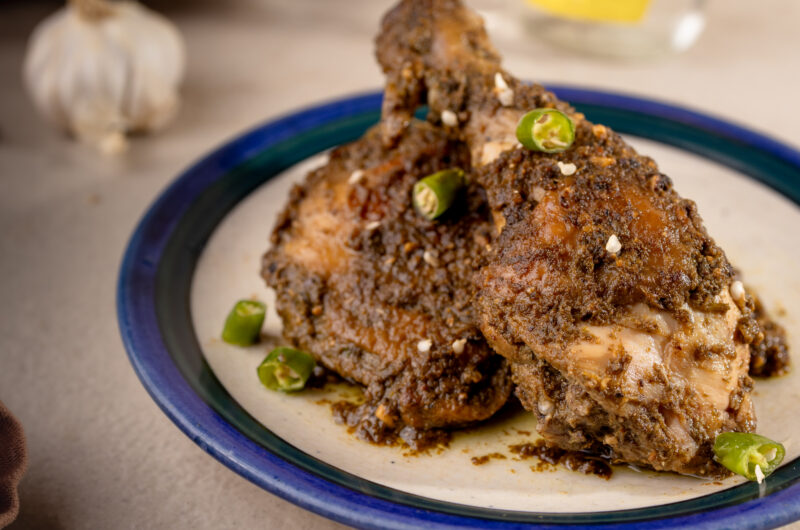
Goan Cafreal Verde (Green Cafreal)
Course: Recipes u0026amp; Techniques4
servings30
minutes40
minutes300
kcalIngredients
Chicken – 1 kg, preferably skin-on
Recommended cut: skin-on thighs- The masala paste
Green chillies – 36 g (≈ 6 medium)
Peppercorns – 2 tbsp
Cumin (jeera) powder – ½ tbsp
Cinnamon – 1 piece, 2-inch
Cloves – 24 nos
Mint leaves – 1 bunch
Fresh coriander leaves – 1 bunch
Cashew nuts – 10–15 nos
Ginger-garlic paste – 2 tbsp
Vinegar – 4 tbsp (traditionally fermented preferred)
Turmeric powder – ½ tbsp
Salt – to taste
Oil (preferrably coconut oil) – 8 tbsp
(Optional) Feni – 1–2 tbsp
Directions
- Grind all ingredients listed under Green Cafreal Masala to a thick paste using minimal water. I prefer making the past slightly rougher to echo the texture you would achieve with a traditional stone grinder (rogdo) and to avoid the extremely smooth paste version which feels artificial to me. However its a personal preference.
- Coat the chicken thoroughly with the prepared masala.
Cover and marinate for 2–4 hours; overnight marination is preferred. - Heat oil in a heavy-bottomed pan over medium heat.
Add the marinated chicken along with the masala. Cook uncovered until moisture is released.
Lower heat, cover, and cook until the chicken is tender and oil and rendered chicken fat separate from the masala.
If using feni, add towards the end and allow it to cook out without flambéing. - Ensure to stir often to wards the end of cooking time as due to the cashew nuts in the paste the masala tends to stick while drying up. When you can see the oil has seperated from the masala, switch off the gas. Serve hot.
Notes
- Skin-on chicken
Skin is important as it renders during cooking and contributes flavour and mouthfeel.
Skin-on thighs provide the best fat-to-meat ratio. - Vinegar
Vinegar is a structural ingredient.
Many modern “local” vinegars are acetic-acid based or diluted. Always taste your vinegar before buying. A good vinegar still contains the mother.
Properly fermented coconut or palm vinegar gives better balance. - Alcohol
Flambéing with rum is a recent, performative addition and is not required.
Feni is optional and should be used only as a background aroma. - Other proteins
The same masala can be used for pork, seafood, or lamb with appropriate changes to cooking time.
If you’ve eaten green cafreal in Goa or at a Goan restaurant, chances are you’ve eaten Cafreal Verde—a dish that is widely considered traditional, yet is actually a post-1980/1990 development.
This matters, because Cafreal Verde is often incorrectly grouped with Frango Cafreal or Frango Piri Piri, which are older, chilli-driven preparations with a very different flavour structure.
This article explains:
- What Cafreal Verde actually is
- How it differs from older cafreal dishes
- Why vinegar, skin-on chicken, and green masala matter
- And how to cook it correctly, without restaurant gimmicks
What Is Cafreal Verde?
Cafreal Verde is a Goan chicken dish made with a green masala of fresh chillies, spices, herbs, vinegar, and aromatics. It is cooked without onions or tomatoes and relies on fat rendered from the chicken and vinegar for body and balance.
Despite being widely served today, Cafreal Verde is not an old or inherited recipe. Its current form emerged after the 1980s, alongside the rise of:
- Restaurant-driven Goan cuisine
- Standardised “green masala” applications
- Influx of Indian ingredients (corriander, mint etc which have no historical farming and are not indigenious to the state)
It belongs to modern Goan food history, not early Portuguese-era cooking.
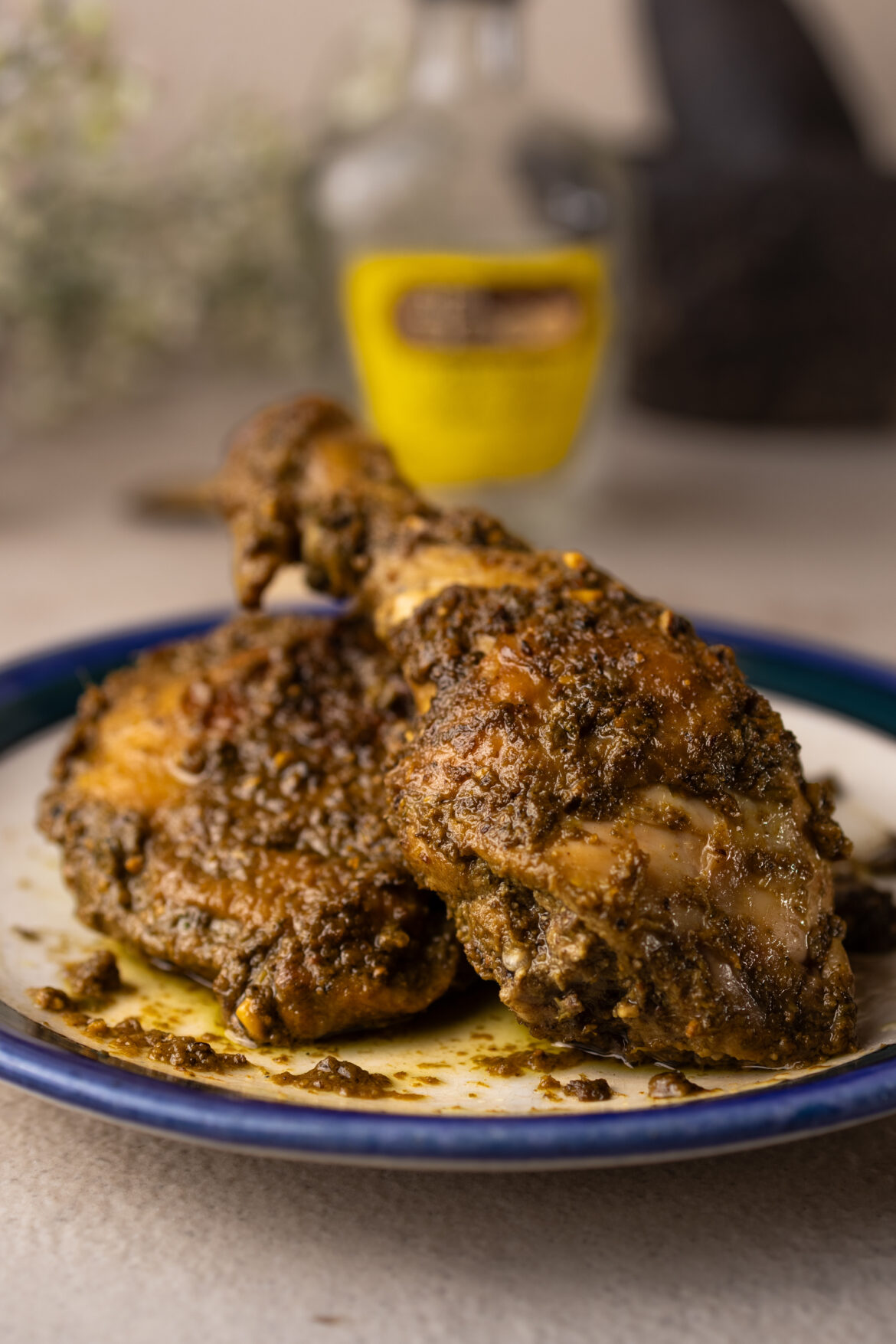
Cafreal Verde vs Frango Cafreal/ Frango Piri Piri
These dishes are often collapsed into one category. They should not be.
Cafreal Verde
- Uses green chillies, herbs, spices, vinegar
- Masala is fresh and green
- Common in post-1980/90 Goan cooking
- No onion, no tomato
Frango Cafreal / Frango Piri Piri
- Uses piri piri chillies (often dried)
- Chilli-forward rather than masala-forward
- Older Afro-Portuguese lineage
- Not a green masala dish
Calling Cafreal Verde “traditional Frango Cafreal” is historically inaccurate.
Why Skin-On Chicken Matters
Cafreal Verde works best with skin-on chicken, especially thighs.
Here’s why:
- The skin renders during cooking
- Rendered chicken fat enriches the masala naturally
- The dish develops body without excess oil
Using skinless chicken often results in a flat, sharp, vinegar-heavy dish that relies too much on added oil.
If you must choose cuts, skin-on thighs are the most forgiving and flavour-accurate option. However the gold standard would be gaunti skin on bird (whole) as the cartiligeous bits and bones give a flavour and texture to the gravy that cannot be mimicked with single cuts.

Leave a Reply